 jo
Login
jo
Login
jo vs Meta Muse
Meta Muse is Meta’s consumer personal AI agent, launched September 2026 on iOS, Android, web, WhatsApp, and Mac. jo is a personal AI agent for work and life with persistent context, proactive help, and approval before it acts.
Life in the city
Is Meta Muse private?
Muse runs inside Meta’s account and infrastructure, under Meta’s terms and privacy policy; read those directly. TechCrunch
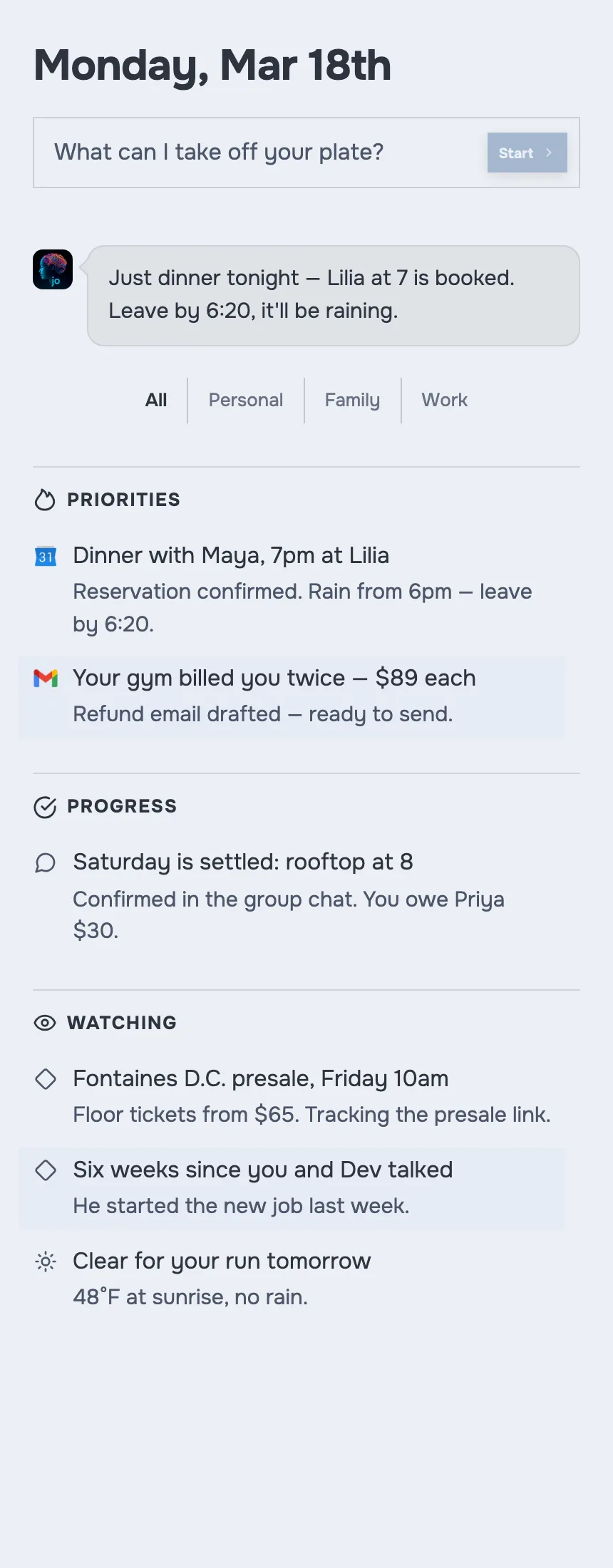
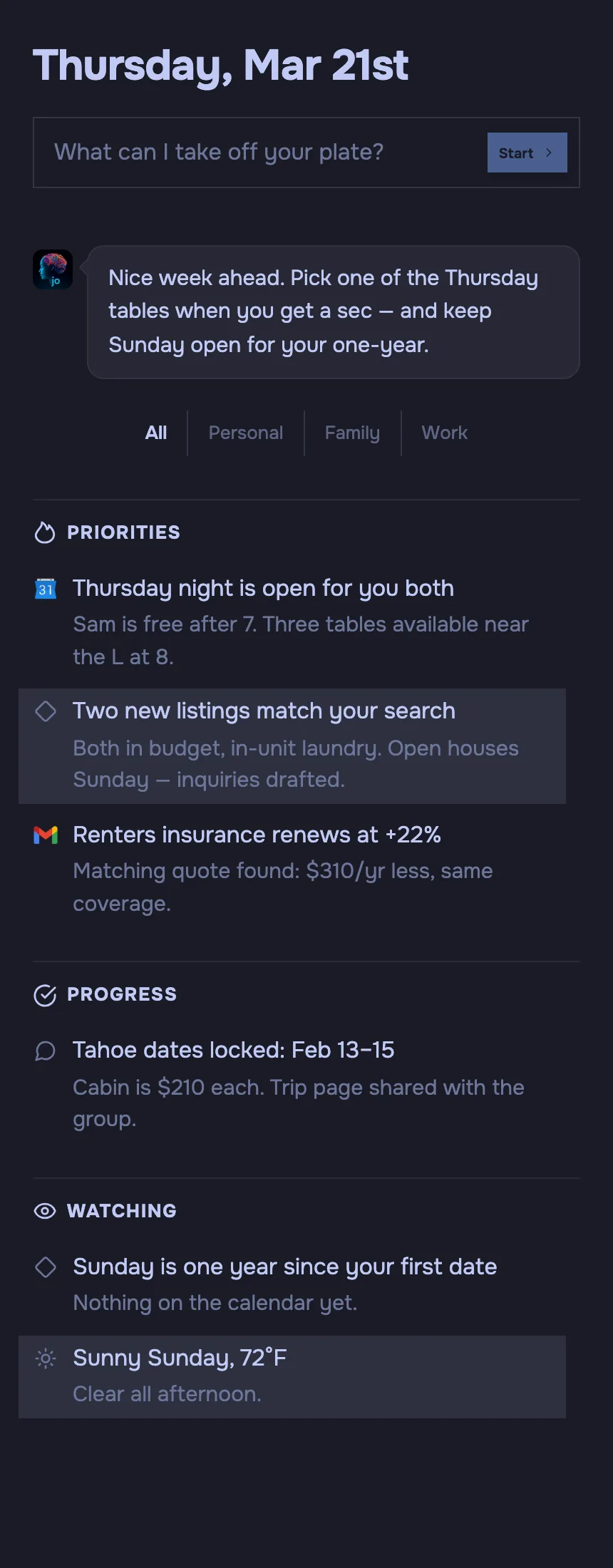
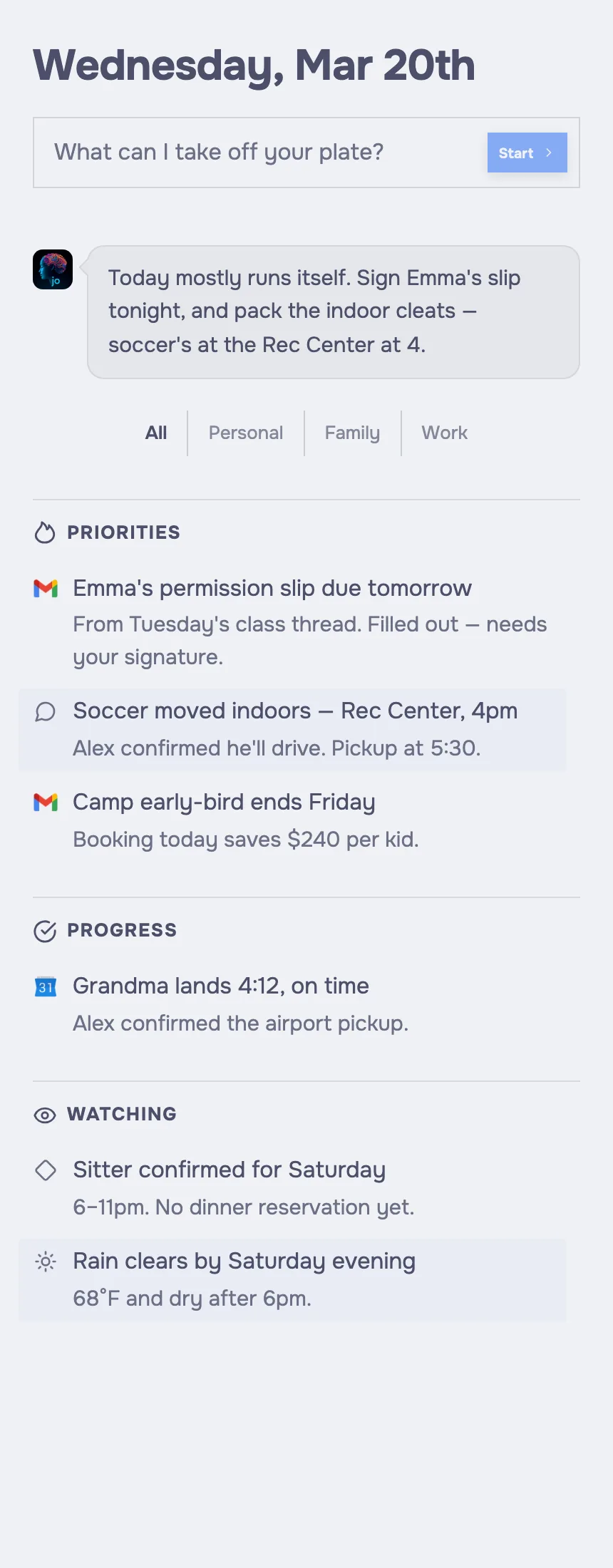
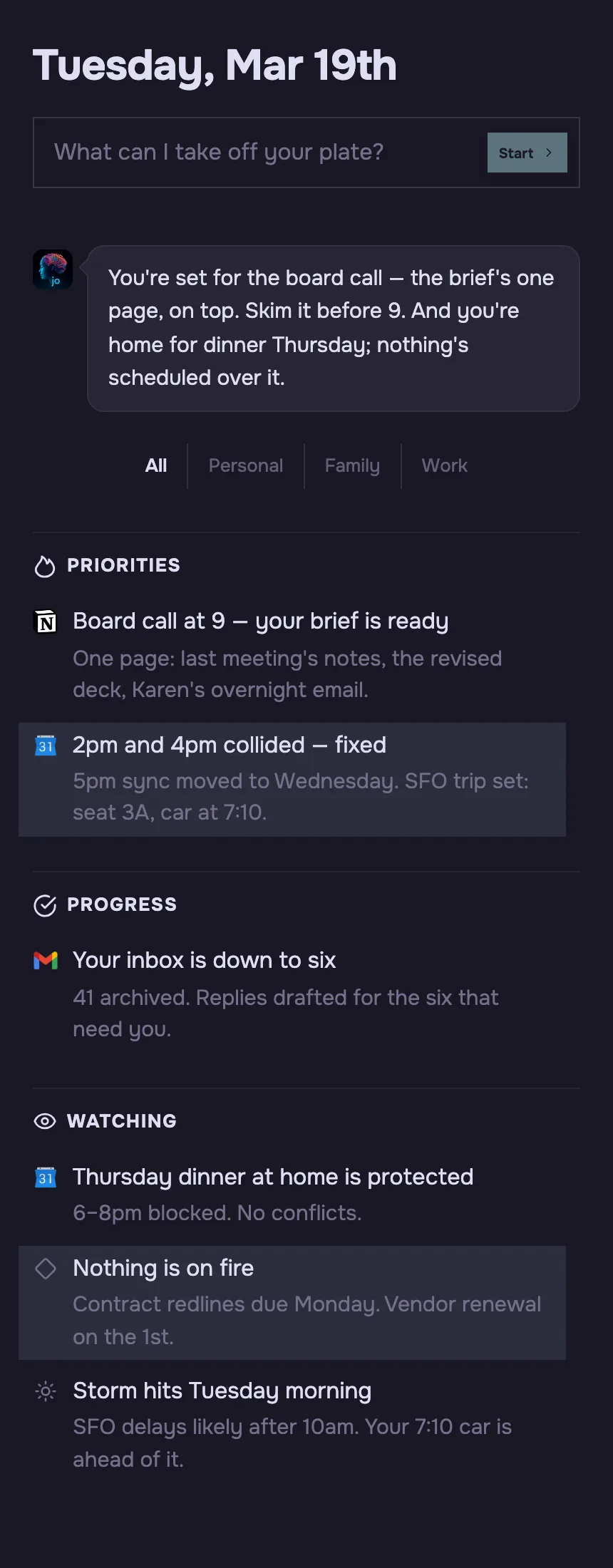
jo runs each person on their own isolated cloud machine and storage, uses zero-retention model endpoints, and does not train on your mail, messages, or screen content. You can delete your account data.
Who asks before acting?
Muse has a separate system that reviews proposed actions and can send them to you for approval. Forbes
jo asks for approval before it sends email or messages, books, buys, or changes your calendar. Summaries and briefings run on their own; everything else waits for you.
Where can you use it?
Muse: iOS, Android, web, WhatsApp, and a Mac app. It can place outbound calls to U.S. businesses on your behalf. TechCrunch 9to5Mac TechCrunch
jo: Apple Silicon Mac and web, plus iMessage, WhatsApp, Telegram, and mobile web. No native mobile app yet. jo is US-hosted and intended for users in the United States.
What does it cost?
Muse: a free tier, plus $20/month and $100/month plans. TechCrunch
jo: free while in beta, no waitlist.
Which is right for you? Choose Muse if you want an agent inside Meta’s ecosystem. Choose jo if you want a personal agent that keeps your data isolated and asks before it acts.
Muse details come from published reporting, not hands-on testing. Sources: TechCrunch, Meta debuts its Muse AI agent, Sep 8 2026; Forbes, Meta launches Muse personal AI agent, Sep 9 2026; TechCrunch, Rival AI agents Instinct and Muse add calls, Sep 17 2026; 9to5Mac, Meta’s Muse AI agent app, Sep 18 2026.
See how jo helps with email, a daily briefing, and messages. All comparisons.