 jo
Login
jo
Login
jo vs Sunsama
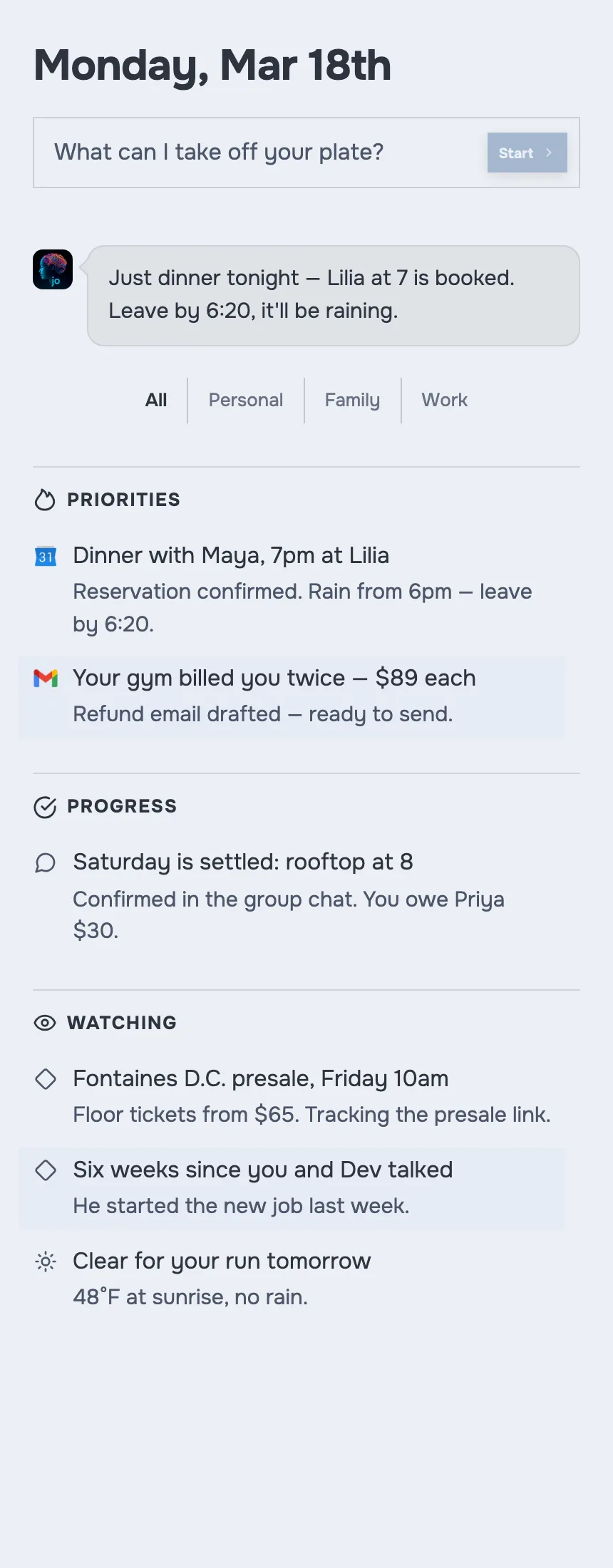
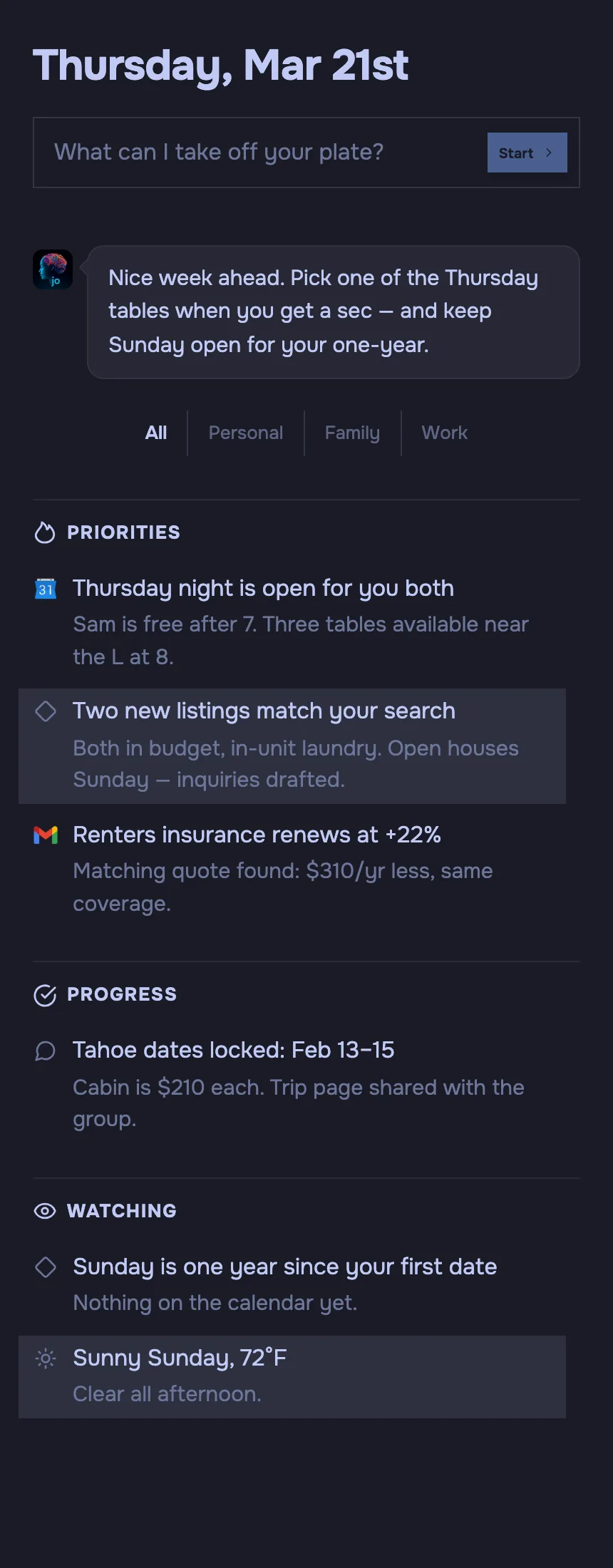
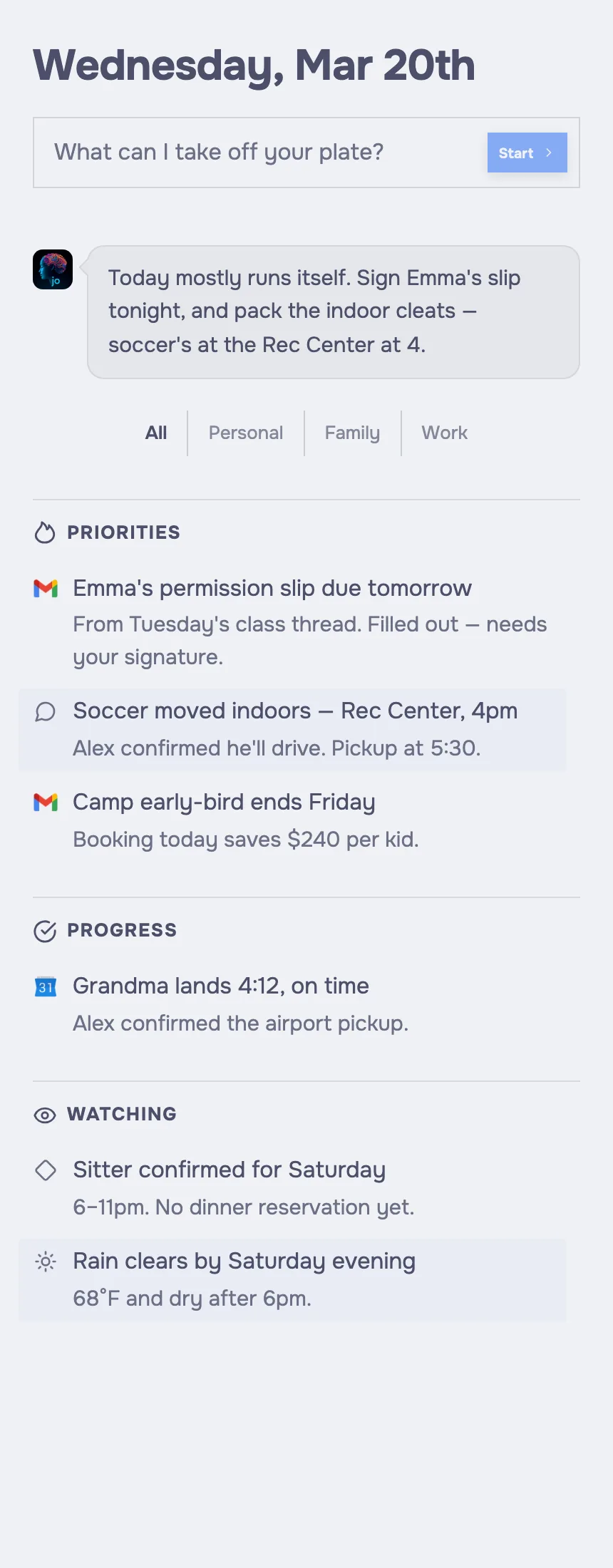
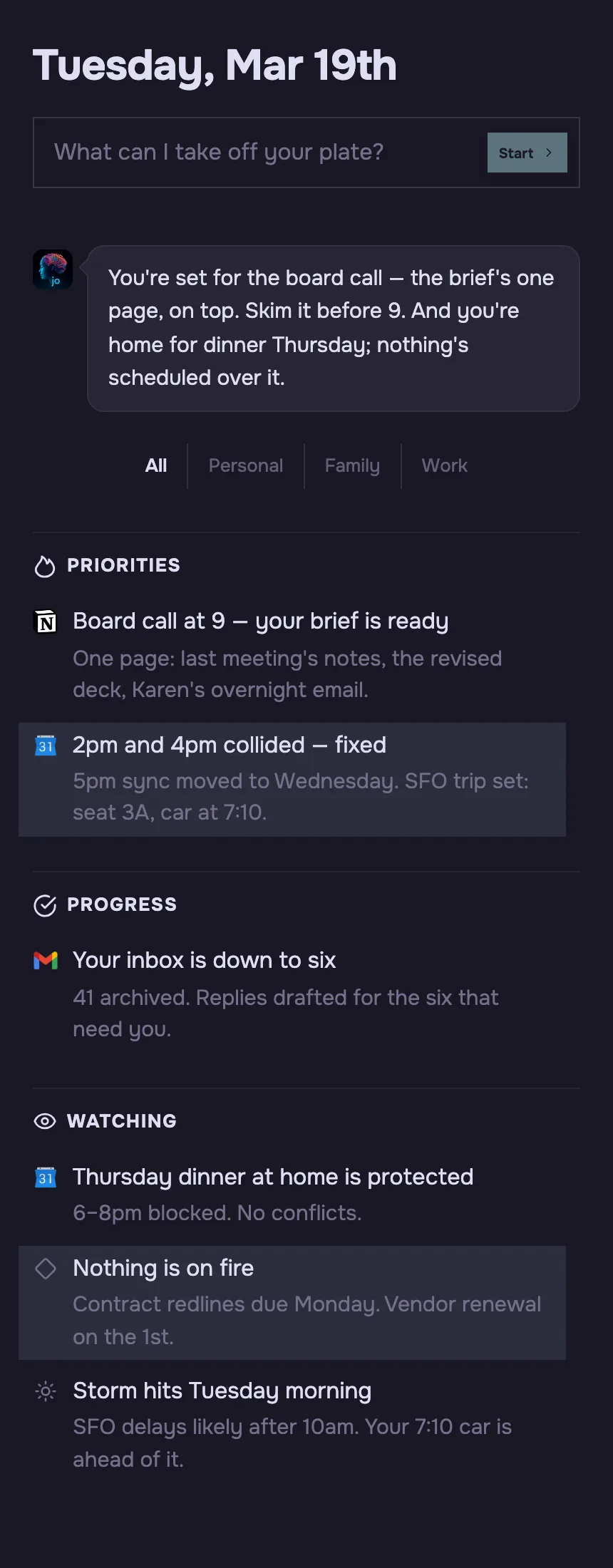
Sunsama is a daily planner for deliberate workdays. jo is a personal AI agent that keeps context across work and life, then helps with follow-through.
Life in the city
What does Sunsama do?
Sunsama plans a day from tasks, calendars, and connected work tools. It supports Google and Outlook calendars, Slack, Asana, ClickUp, GitHub, Jira, Linear, Notion, Todoist, Trello, and more. 1
Its AI features generate daily summaries and task-planning suggestions from task, calendar, connected-work, and usage data. 2
How does context and privacy work?
Sunsama stores tasks, notes, calendar events, and the information needed for connected integrations. Its policy says personal tasks, calendars, notes, and usage patterns are not used to train its or providers’ AI models. 2
jo keeps relevant context from conversations and connected apps over time. Each user has isolated cloud machine and storage; jo uses zero-retention model endpoints and does not train on mail, messages, or screen content.
Where can you use it?
Sunsama has iOS/iPadOS, Android, macOS, Windows, and Linux apps. 1
jo works on Apple Silicon Mac and the web, with mobile access through mobile web, iMessage, WhatsApp, and Telegram. There is no native mobile app yet.
What does it cost?
Sunsama Pro is $17 per month when billed yearly or $22 month-to-month; it includes unlimited integrations and AI, MCP, and Zapier access. 1
jo is free while in beta, with no waitlist.
Which is right for you? Choose Sunsama for structured daily planning from tasks and calendars. Choose jo for a personal agent that maintains work-and-life context and asks before it sends, books, buys, or changes a calendar.
See how jo helps with email, a daily briefing, and messages. All comparisons.
Competitor details come from the sources below, not hands-on testing.
- Sunsama, pricing — sunsama.com
- Sunsama, privacy policy — sunsama.com